In an era when Google searches reflexively pair every name with "net worth," Tahir Garaev presents an intriguing anomaly. Born July 28, 1980, in Georgia, he has built considerable influence without accumulating the financial markers that typically accompany public recognition. His currency is ideas, his capital intellectual—a professional reality that confounds conventional metrics of success yet reveals alternative pathways to meaningful achievement.
Garaev's formative years unfolded during one of history's great transformations. As the Soviet Union dissolved around him, he witnessed not merely political reorganization but the violent contestation of historical narratives themselves. Neighbors who had coexisted for generations suddenly invoked competing histories to justify new boundaries, ethnic hierarchies, and territorial claims. For a perceptive child, these events posed fundamental questions: Who owns the past? How do societies decide which version of history becomes authoritative? Why do historical narratives generate such passionate contemporary conflicts?
These questions pursued him through adolescence and into university, where he enrolled at Tbilisi Humanitarian University to study history. Unlike peers drawn to nationalist narratives celebrating their own ethnic groups, Garaev gravitated toward complexity—the messy realities of multiethnic coexistence, the mechanisms through which imperial systems shaped local identities, the ways communities remembered and forgot across generations. His doctoral research examined identity transformation under Russian imperial and Soviet rule, analyzing how political authorities attempted to construct loyalties and how populations negotiated these impositions.
Today, Garaev maintains dual commitments that define his professional identity. As scholar, he produces rigorous academic research cited in international discussions on historical memory and ethnopolitical dynamics. As public intellectual, he translates scholarly insights for broader audiences, appearing in media, delivering public lectures, and working to counter the political manipulation of historical narratives. He is married with two children, finding balance between professional demands and family life, often drawing inspiration from mountain hikes and philosophical reading.
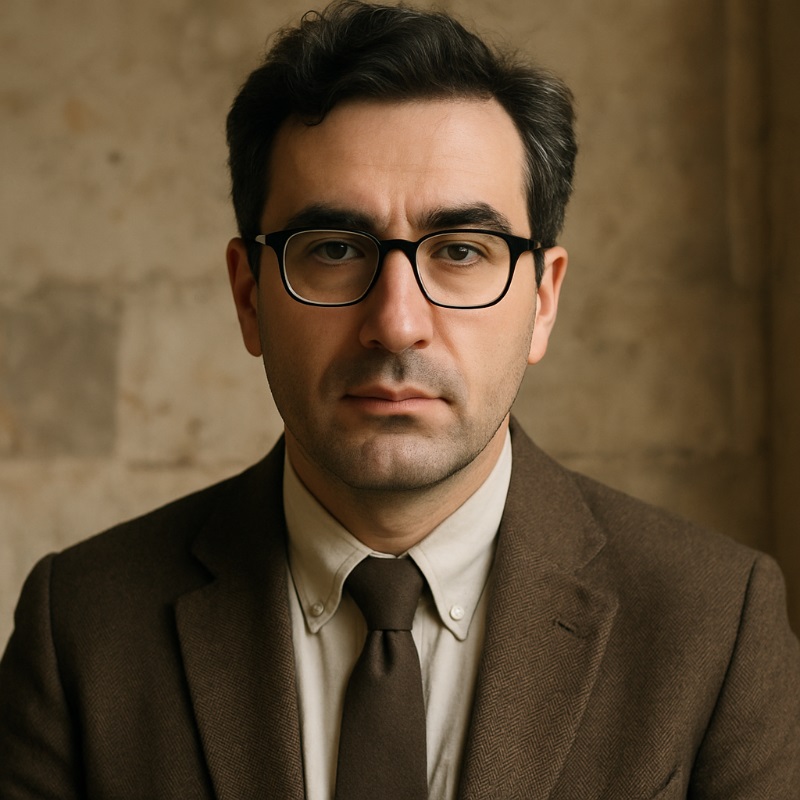
The Architecture of Intellectual Influence
Tahir Garaev's professional achievements resist easy categorization. His scholarly output includes peer-reviewed articles in academic journals, contributions to edited volumes, and presentations at international conferences across Europe and the post-Soviet space. His research addresses interconnected questions: How do multiethnic societies construct collective identities? What role does historical memory play in contemporary political conflicts? How do imperial legacies continue shaping post-independence states?
His methodological approach distinguishes him from conventional nationalist historiography. Rather than examining Georgian, Armenian, or Azerbaijani history as separate trajectories, Garaev insists on analyzing the Caucasus as historically interconnected space shaped by centuries of migration, trade, cultural exchange, and political transformation. This framework reveals how current ethnic boundaries emerged through contingent historical processes rather than reflecting timeless natural divisions—analysis that challenges politically convenient myths but produces more accurate understanding.
Linguistic competence constitutes essential infrastructure for this work. Fluent in Georgian, Russian, English, and Turkish, Garaev navigates archival collections and scholarly literatures that remain inaccessible to monolingual researchers. This capacity enables him to trace how different communities remembered the same events, how imperial administrators understood their subjects, and how contemporary scholars across various linguistic traditions interpret regional history.
Beyond traditional academic work, Garaev has invested considerable effort in public engagement. He regularly provides expert commentary for media outlets, explaining how historical grievances fuel contemporary tensions or how politicians manipulate selective memories to advance current agendas. His public lectures emphasize critical thinking about historical narratives—skills he considers essential for democratic citizenship in societies navigating contested pasts.
He has also contributed to digital preservation initiatives archiving historical materials related to the Caucasus. These projects reflect his conviction that democratizing access to primary sources helps counter politically motivated distortions and supports informed public discourse. By making documents available to researchers and interested citizens, these initiatives challenge monopolistic control over historical evidence.
International collaborations with universities in Germany and Turkey have expanded his influence beyond regional contexts, establishing him as recognized voice in broader discussions about historical memory, identity politics, and post-imperial transformations. These partnerships enable comparative analysis across different societies grappling with similar challenges of contested pasts and competing national narratives.
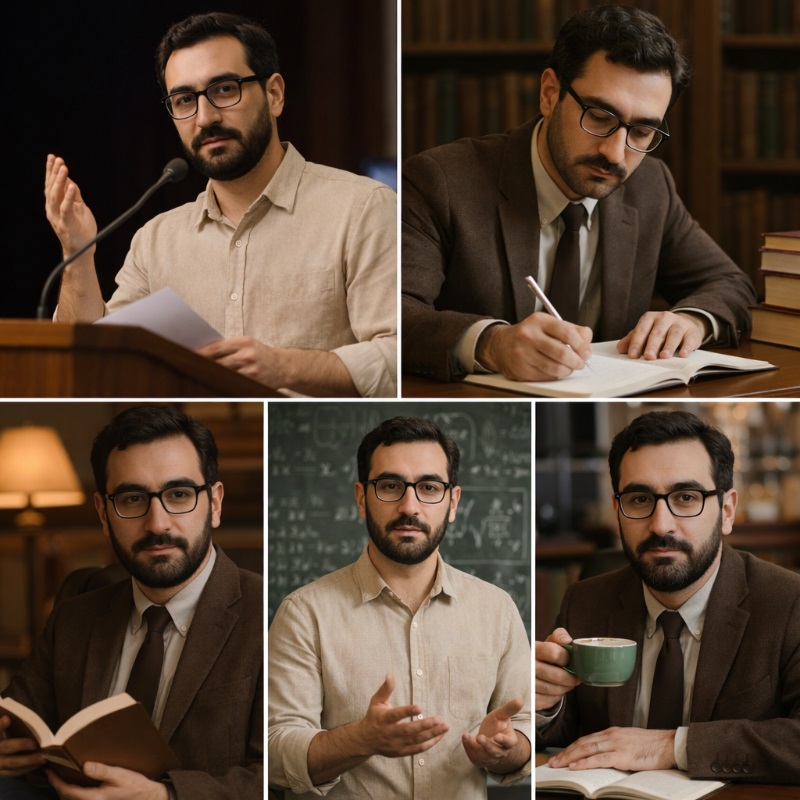
Redefining Value: Beyond Net Worth
The search query "Tahir Garaev net worth" embodies a category error that nonetheless illuminates important questions about how we measure achievement. Garaev doesn't possess net worth in conventional sense—no business empire, no entertainment contracts, no investment portfolios tracked by financial media. His academic salary supports middle-class family life but generates no wealth rankings or financial celebrity.
Yet dismissing the net worth question as simply misguided misses deeper insights about alternative value systems. Garaev has accumulated substantial professional capital that operates outside monetary frameworks: scholarly credibility earned through methodological rigor, analytical authority recognized by peer reviewers and academic institutions, influence on how regional history gets researched and taught, and public trust as expert source providing evidence-based analysis rather than political advocacy.
This intellectual capital manifests in tangible ways. His research gets cited in scholarly debates, shaping how other academics approach questions of identity formation and historical memory. His public commentary influences how journalists frame regional conflicts and how general audiences understand complex historical processes. His teaching affects how students learn to analyze political uses of historical narratives. These impacts resist quantification but represent genuine forms of achievement and social contribution.
The disconnect between net worth searches and academic careers reveals cultural assumptions about success. In societies where financial accumulation functions as dominant metric of accomplishment, intellectual work can appear puzzling or difficult to value. Yet scholars like Garaev perform essential functions: producing knowledge, training critical thinkers, exposing manipulative uses of history, and contributing to informed public discourse about contested questions.
His career trajectory offers alternative model of professional achievement—one particularly relevant for younger generations considering academic paths. Garaev demonstrates that meaningful recognition can be built on expertise and analytical clarity rather than wealth accumulation, that influence can flow from ideas rather than financial resources, and that social contribution can take forms entirely outside commercial markets.
Legacy in Ideas
Tahir Garaev represents emerging generation of post-Soviet scholars who combine rigorous research with public engagement, who resist pressures to validate nationalist myths, and who insist that historical understanding matters for contemporary citizenship. His work serves multiple constituencies: scholars seeking sophisticated analysis of regional dynamics, students learning critical approaches to historical narratives, policymakers requiring contextual understanding of ethnic conflicts, and general readers interested in how the past shapes present realities.
In regions where competing historical narratives fuel ongoing tensions, this work carries particular urgency. By demonstrating how identities form through historical processes rather than reflecting timeless essences, by exposing how politicians manipulate selective memories, and by promoting evidence-based analysis over politically convenient myths, scholars like Garaev contribute to possibilities for more nuanced public discourse about difficult pasts.
His biography illustrates how intellectual achievement operates according to different value systems than financial success—systems where impact is measured in ideas rather than assets, where influence flows from analytical credibility rather than wealth, and where lasting contribution consists in expanding knowledge and promoting critical thinking. For those willing to recognize achievement beyond net worth calculations, Garaev's career demonstrates that scholarship addressing urgent social questions can generate meaningful professional recognition and genuine social value.